

Legendary Traders · Market Wizards: The Next Generation
Phil Goedeker
$5,000 to $53 Million, and Exactly One Losing Year
Chapter five of Market Wizards: The Next Generation, “The Impatient Trader”
Last reviewed: September 2026. Every figure below is drawn from chapter five of Market Wizards: The Next Generation unless it is explicitly labelled as our own arithmetic. Complete Trader’s Edge has not audited any trading statement.
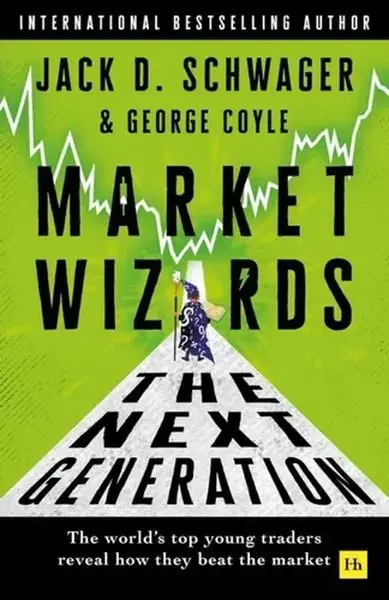
Phil Goedeker turned $5,000 into $53 million over twenty years using the two strategies most likely to destroy an account: short selling and selling option premium. In two decades he has had one losing year, and it cost him about $30,000. He has never come close to a loss that endangered the account.
That combination is the reason the chapter exists. Plenty of traders have made large sums shorting parabolic stocks, and plenty have made a living selling premium. Almost none have done both, for twenty years, without the single catastrophic event the two strategies are famous for producing. The interesting question is not how he made the money. It is what he does differently on the way out of a trade.

Phil Goedeker at a glance
| Field | Detail |
|---|---|
| Known as | The Impatient Trader |
| Background | Missouri. His father owned a St. Louis business selling appliances, furniture and electronics |
| Education | Accounting major, chosen for its usefulness in analysing financial statements |
| First two accounts | $3,000 each, one year apart, both lost in full |
| The account that worked | $5,000 saved selling furniture for his father in the summer before his senior year |
| First million | Nine months, August to May, reaching $1,007,000 |
| Cumulative record | $5,000 to $53 million over twenty years |
| Losing years | One, in his fourth year of trading, about $30,000 |
| Best year | 2020, over $10 million |
| Most recent year cited | $6 million |
| Original strategy | Shorting trashy small-cap stocks after parabolic rallies |
| Current strategy | Selling deep out-of-the-money option premium on stable mega-caps |
| Indicators used | Two, in twenty years: price and volume |
| Capital at risk | About 10% of total assets sits in the trading account |
| In the book | Chapter 5 of Market Wizards: The Next Generation (2026) |
Who is Phil Goedeker?
Goedeker does not look like a high-performance trader, and Schwager says so plainly. He is Midwestern, pleasant and plainspoken. When he is not trading he hunts, fishes, tends farmland or coaches his children’s sports teams. Meet him without knowing, and a market-obsessed trader with a nine-figure record would not be on the list of guesses.
The record itself is unusual in a specific way. He made it with two strategies that are widely understood to be the most prone to blow-ups. Short sellers get run over by squeezes; the GameStop shorts of 2021 are the obvious modern example. Option sellers get destroyed in a gap. The cliche about the second strategy, picking up nickels in front of a steamroller, is well earned. Many asset managers, not only retail traders, have blown up running it after years of consistent profitability.
Goedeker has done both for twenty years with one down year of about $30,000. The chapter’s implicit question, and ours, is what protects him.
The record, year by year
| Period | What the chapter states | What it tells you |
|---|---|---|
| College, first attempt | $3,000 saved working for his father; lost over about twelve months | Buying uptrends with no patience and $7 commissions |
| College, second attempt | Another $3,000, same approach, lost in full | He calls it trading tuition |
| August to May, senior year | $5,000 to $1,007,000 | All-in short positions at maximum margin |
| That summer | $1 million down to $500,000 | Overconfidence and strategies he had no skill in |
| August, same year | $400,000 wired to the bank, restart at $100,000 | The decision that separated him from his losses |
| Rest of 2006 | About $25,000 a month, year finished around $500,000 of profit | Including the $400,000 already banked |
| 2007 and 2008 | Reset to $100,000, finished each year up over $500,000 | Deliberately keeping the account small |
| 2009 | Lost about $30,000 | Triple-leveraged ETFs. His only losing year |
| 2010 | Back to shorting overextended stocks, up $600,000 | The return to the niche |
| 2011 | First year over $1 million in profits | The year he fixed position sizing |
| 2020 | Over $10 million | His best year, in the most favourable market he has seen |
| Most recent year cited | $6 million | Options-dominant, with a deliberately low goal |
| Twenty years | $5,000 to $53 million | One losing year in the whole span |
Our arithmetic, not the book’s. $5,000 to $53 million is a multiple of 10,600, which over twenty years works out at roughly 59% compounded annually. Treat that number as a description of the whole arc rather than a typical year. It is not a fund return: he withdrew heavily and repeatedly, deliberately resetting the account to $100,000 at the start of 2007 and 2008, and the bulk of the multiple was earned in the first nine months when the account was tiny and the leverage was extreme. A 201-fold gain on $5,000 is a different event from a 59% year on $50 million.
Lake of the Ozarks
The origin is specific and it matters, because it explains the impatience in the chapter title.
Goedeker’s father owned a business in St. Louis selling appliances, furniture and electronics. He took one week of holiday a year, spent at Lake of the Ozarks. In certain sections of the lake there are mansions with large boats. At about fifteen, Goedeker saw them and did the arithmetic on his own future: his parents worked very hard, and one week a year was the result. He did not want that life.
He reasoned through the options the way a fifteen-year-old with an accounting brain would. A professional career might get him there eventually, but only after a long one. Real estate and the stock market were faster, but real estate needs money to start and no fifteen-year-old can participate. The stock market he could reach. He came home from that holiday and started reading the Sunday business section of the St. Louis Post-Dispatch, which carried a column of year-to-date price changes. It was the late 1990s and everything was going up. He saw stocks up 400%, 800% and 1,000%.
He lived half a mile from a library and started checking out every stock market book he could find. The family had no internet at home, so he used the library for that too. His father was not an individual stock investor but held mutual funds, and had taught him compound interest. Goedeker understood the concept and rejected the timeframe. Compounding is a long game. He wanted the money sooner.
Two accounts of tuition
His first real attempt came in his sophomore year of college. He worked for his father over the summer assembling furniture and doing whatever else needed doing, saved $3,000, and had his mother cosign the account so he could get margin.
The method was the obvious one: buy stocks trending up, on the theory they would keep going. It did not work. He would make fifty or seventy-five dollars on a trade, then lose a similar amount on the next two or three. Over twelve months the account dwindled to almost nothing.
Schwager presses on the interesting part. Buying stocks in an uptrend is generally the right thing to do. Why did it fail? Goedeker’s answer is the chapter in miniature: he has no patience. He wanted big moves that happened immediately. If a stock was up on Monday, Tuesday and Wednesday, he would buy Thursday morning; if it was down when he got home from school on Thursday afternoon, he sold on Friday. The stock might resume its climb the following week, but he would not be in it. He had no edge at all in what he was doing, and at roughly $7 a trade, commissions bled the account further.
A year later he went back to work for his father, saved another $3,000, and did exactly the same thing with exactly the same result. His attitude to losing it a second time is worth noting, because it is not resilience in the usual inspirational sense. He says he did not care. His college friends would have viewed the same money as party money. He considered the $3,000 trading tuition, and assumed he would eventually figure it out and it would all pay off.
Asked where that confidence came from with no evidence to support it, he gives the honest answer: it is how his brain has always worked. He does not take no for an answer, he believes effort and dedication solve problems, and when he sees someone else succeeding he asks why he cannot do the same.
He chose accounting as a major because he thought analysing financial statements would be useful, and he read Warren Buffett. He has never used fundamental analysis in his trading. His explanation is not disrespect, it is horizon: Buffett buys a stock and never sells it, and Goedeker wanted to buy one and sell it the following week. For a trade measured in days, he says, fundamentals are close to meaningless.
The summer that changed everything
Before his senior year, his father told him the odd jobs were over and he was going on the sales floor, paid on commission like the other salesmen. There were twenty to twenty-five of them. By his second month Goedeker was the top salesman in the store. He saved $5,000.
That same summer he learned that shorting stocks was possible, and his approach changed completely. He had spent years watching stocks put in climax rallies and fall straight back down, and had been trying to buy them. Once he realised he could bet on the decline instead, he stopped looking for stocks to buy and started looking for stocks to sell.
Then he studied charts. Tens of thousands of them. One pattern kept appearing: stocks that ran up a long way very fast tended to come back down hard and fast.
Host America
His first short was a company called Host America, which had issued a press release saying it was doing business with Walmart. The stock went from $3 to $15 or $16. It went up so far and so fast that Goedeker decided to short it, waited a day or two until the advance stopped, and went all in when the rally stalled.
That day or the next, trading in the stock was halted. He did not know what that meant. The only commentary he could find was a Yahoo message board where everyone was saying Walmart would buy the company out and the stock would open at $30 or $40. His stomach sank; he assumed he had blown up an account in a single trade for the third time.
The halt lasted a couple of weeks. When it resumed, the stock opened around $5. His account nearly tripled overnight. NASDAQ, he believes, had made the company redo its release because it was false and misleading: it had implied its product would be sold at Walmart when it had only scheduled a meeting. Once the claim was corrected, the stock collapsed.
This is the one trade in the chapter that was pure luck, and Goedeker does not pretend otherwise. He had no idea what a halt was, no view on the fundamentals, and no control over the outcome. What matters is what he did with it: from that moment he committed to shorting overbought stocks and built a process around it.
$5,000 to $1,007,000 in nine months
In his senior year he organised his class schedule around market hours. He screened nightly for the biggest winners of the day, the past three days and the past five days, looking for multi-day and sometimes multi-week runners that were waiting to peak out. Then he shorted them. The profits compounded, the account exploded in the final months of the year, and by May it had passed $1 million. He took a screenshot of $1,007,000 on his phone.
The sizing was total. He was all-in on every trade, at maximum short margin. With $50,000 in the account he was short $100,000 of stock; at $200,000 he was short $400,000; at $500,000 he was short $1 million. Every position, every stock, every time.
The obvious question is how he survived that, with open-ended risk on the short side and 200% of assets exposed every day. His answer is an exit rule so fast it barely qualifies as a stop.
“Either the trade works immediately, or you’re out.”
If a stock he had shorted kept running, he exited and waited for it to break down again before re-entering. Asked for a number, he gives one: short at $12, out as soon as it goes to a new high, probably around $12.50. He had studied enough charts to have an expectation of the move that should follow his entry, and if the subsequent price action did not match that expectation, he was gone.
He also had no rule about how many times he could try the same stock, though in practice he rarely tried more than three or four before deciding the trade was too tricky to bother with.
Asked about his emotions during a run that turned $5,000 into $1 million, he is almost flat about it. He expected to win. Not that he expected to multiply his money two hundred times, but he expected the method to work. After thousands of hours studying markets, it finally clicked.
His father’s reaction is the human moment of the chapter. Told about the million dollars, he congratulated his son and advised him to put it all in the bank, because nobody can do this for a living. Goedeker said he loved him, had learned a lot from him, and was not going to do that.
The $500,000 that went back
He should have listened a little. That summer the account went from $1 million to $500,000.
He is not sure exactly what happened and does not dress it up. He was probably too cocky. He tried to expand into a few other techniques, which did not work. In August he said enough, wired $400,000 into his bank account, and started again with $100,000.
He had just graduated. He knew that if he did not want a conventional job, trading had to work, and he committed to doing exactly what had worked before.
That decision, and its repetition, is the most transferable thing in the first half of the chapter. Through the rest of 2006 he made about $25,000 a month and finished the year with around $500,000 of profit including the banked money. At the start of 2007 he brought the account back down to $100,000 and finished the year up over $500,000. He did the same in 2008.
Asked why he did not leave more in the account when it was working so well, his answer is about comfort with position size. What he was doing was working, and he was comfortable with the risk that sizing produced. Having just watched $1 million become $500,000, he did not feel comfortable doubling his exposure.
Then he did the thing that traders do when a method is working and they are bored. He felt the need to grow, started experimenting with other strategies including triple-leveraged ETFs, and was not good at any of them. His fourth trading year, 2009, became the only losing year of his career: about $30,000 down. At the start of 2010 he went back to shorting overextended stocks, which is what he was actually good at, and finished the year up $600,000.
The audit that produced the A+ trade
By 2011 he felt ready to increase position size. Before doing it, he analysed his own trades. This is the single most useful passage in the chapter, and it is entirely reproducible by anyone with a statement and a spreadsheet.
He had traded about 500 different tickers the previous year. Broken down by ticker:
| Group | Roughly how many | Result per ticker |
|---|---|---|
| Big winners | 15 | Gains of around $75,000 to $100,000 |
| Meaningless | Over 400 | Gains or losses of a few thousand dollars |
| Significant losers | The remainder | Losses generally between $20,000 and $40,000 |
When he looked closely at the larger losers, he found that there was often no setup at all. His reaction, in his own words, was to ask what he had been doing.
Our arithmetic, not the book’s. Fifteen tickers at roughly $87,500 each is about $1.3 million of gross gains. The chapter does not give the number of significant losers, so we cannot total them, but the scale is easy to feel: twenty losers at $30,000 apiece would take $600,000 straight back out, and thirty would take $900,000. On that arithmetic the entire year was decided by a group of trades that produced almost nothing and a smaller group that should never have been entered at all.
He made two changes. He moderately increased position size on the A+ trades. And he drastically reduced the losses on everything else by cutting the size of those trades by about 90%. It was the first year he had correct position sizing, and the first year he made more than $1 million in profits.
What counts as A+
His definition is one sentence: going short a trashy small-cap stock after a parabolic rally. Those trades work nine times out of ten. There were fifteen of them in a year, a little more than one a month.
The risk management inside that setup is where the chapter earns its title. Goedeker tells a story from a chat room where several traders were short the same stock from about $10, and the stock went to $12. One trader said he had added at $12. Another said he would add at $13, and more at $15. Someone asked Goedeker when he would add.
He had covered at $10.50. Asked why, he gave the answer that runs through his whole career: his entry was wrong.
“I learned early on that if my entry is not right, then it’s wrong.”
He wants to be green quickly. If he shorts a stock and it goes up, he is losing money, and he sees no reason to add to a position that is telling him he was wrong. He can always get back in later, and often does.
This is worth separating from the usual advice about cutting losses, because it is stricter. The common rule is to exit at a predetermined loss. Goedeker’s rule is to exit when the trade fails to do what he expected, which usually happens long before a conventional stop would be hit. That is what produces a portfolio of what he calls paper cuts: many small losses, absorbed without real damage. What he is avoiding, in his phrase, is the one guillotine cut.
Why he kept taking the other trades
Schwager asks the obvious follow-up. If the non-A+ trades were net losers, why take them at all?
Goedeker’s answer is unusually honest. A+ trades came along about once a month. He was a full-time day trader, working all day, and he wanted to trade. He describes himself as addicted to it. He also thinks part of the problem was believing he could do anything, a trait that has served him well and also cost him. If he sees a trader who only trades the news, or only buys breakouts, he thinks he could do that too. Realistically, he says, you cannot be a great long trader and a great short trader, and you cannot excel at shorting parabolic rallies, buying breakouts, trading the news and trading options all at once. He has never known a successful trader who thought they could do all of it. Early in his career, he did.
Looking back, the net performance on his B and C setups is probably close to flat. What took his profit and loss to the next level was finally managing position size: sizing the A+ trades much larger, and sizing everything else so small that it could not matter.
The addiction language is his, and he is clear-eyed about both sides. It gave him a successful career. It also means his mind does not turn off. The market closes at three in the afternoon Central time and his internal clock keeps running until bed: check the news, check the futures, check Bitcoin, check whether the president has said anything. He never stops thinking about markets, and sometimes wishes he had an off switch.
Self-taught, from a binder of charts
There were no courses, no mentors and no online classes when he started. He does not remember ever seeing a book about short-term trading; every stock market book in the library was about buy and hold, and the basic message was to invest at twenty and hold until sixty.
He says he is glad. Being forced to learn on his own through thousands of hours of chart study is, in his view, the reason he is the trader he is. He printed charts of stocks that had moved 600%, 800% or 1,000% in a year, each showing the whole advance, and a second chart showing the top and the subsequent decline. He kept them in a binder. When a current chart looked familiar, he searched the binder for similar past cases and studied how the price action had evolved.
It is the same route Kristjan Kullamägi took, and Coyle notes the parallel directly in his closing comments: both traders studied thousands of charts to develop a style of their own. There is no shortcut in either account.
The second career: selling option premium
Goedeker gave up actively shorting stocks a couple of years before the interview, because he burned out doing it. For his first ten years he traded the entire market day, researched setups at night and spent another three or four hours a day on the weekend. He is older now, and as he puts it, there is a life to live outside the market. He still has to be a husband. He still has to be a father.
He has seen what the other path looks like. He describes traders who spend their entire adult lives in front of screens and let the stress get to them. One trader he knows, in the business about as long as he has, once sent him a photo of his desk setup. Goedeker zoomed in: two bottles of pills, an inhaler, a vape pen and a beer. The explanation was heart medicine, a beta blocker, the inhaler or vape for stress, and Friday drinking to settle down.
The mentor
In 2016 Goedeker was in a small chat room with about eight traders, all good. One of them messaged to say he thought Goedeker was the best trader in the room, and asked to be taught his style. Goedeker declined. The trader offered to pay. He declined again. Then came the counter-offer: what if I taught you how to trade options?
He agreed instantly. He had wanted to expand his playbook and did not understand options.
The exchange was done by screen share, each watching the other trade in real time. The mentor’s strategy was simply selling option premium, run on an account well into eight figures. Goedeker started small at $200,000, because he assumed he would lose it. He did not lose it. Within a month or two he realised $200,000 was insufficient to sell naked options properly, increased the account to $1 million, and a few months later added another million. In his first year he made a million dollars trading options, and the options business took off from there.
The actual strategy
Schwager pushes back hard on this section, correctly: selling options has no real edge in itself, since the probabilities favour the seller only in exchange for accepting open-ended risk. Goedeker’s answer is that the strategy is risk management and stock selection, not premium collection.
| Decision | What he does |
|---|---|
| Underlying | Stable mega-caps such as Apple, Amazon and Microsoft. He avoids stocks that can gain hundreds of percent quickly, such as GameStop |
| Distance | Deep out of the money, always |
| Greeks | None. He does not have a single Greek on his screen and does not think in terms of delta |
| Strike selection | From the chart, expressed as a percentage below the market |
| Two-week puts | Strike around 10% below the market |
| Thirty-day puts | Strike around 20% to 25% below the market |
| Six-month puts | Strike around 50% below the market |
| Puts versus calls | About 80% puts, 20% calls |
| Calls only on | Mega-caps he believes will never be bought out |
| Time to expiration | Two weeks to six months |
Two details in that table deserve expanding, because they are counterintuitive.
The first is why he sells longer-dated options when short-dated premium decays fastest. His answer is total premium, not decay rate: going six months out, he can still collect decent premium on strikes 50% or even 60% out of the money. Schwager makes the counterargument that selling a one-month option six times collects more than selling a six-month option once, and Goedeker’s reply is about the shape of a crash. When the market sells off sharply, longer-dated options with strikes far below the market barely move, while shorter-dated options nearer the money get repriced violently. He never wants to hold a short-dated option that is only moderately out of the money through an earnings report. He is happy to hold a long-dated option with a strike a long way away.
The second is the split between puts and calls. He started at roughly 50/50 and learned the hard way. Selling calls gets you into trouble much faster, because a takeover or a mania has no ceiling, while a stock can only fall to zero. He rarely hears of a trader blowing up selling puts. He has heard of many blowing up selling calls. His own tuition on that point was GameStop: he sold calls in it and covered the position for a $1 million loss, and learned not to sell options in that type of stock again.
He is also candid about the danger in a way most premium sellers are not. He says selling options is vulnerable to unlimited losses and is probably one of the most dangerous methods in trading, and that this is precisely why he has never discussed it in any conference presentation he has given. He does not want people applying it incorrectly and taking a large loss. Schwager’s summary is that Goedeker has the risk-management instinct that most people attracted to option selling do not, and knows it.
Liberation Day, and what a real hedge looks like
The clearest demonstration of that instinct is recent. When the market opened sharply lower the day after the April 2025 tariff announcement, Goedeker bought June SPY puts to hedge his short option portfolio: roughly 800 to 900 contracts at an average of $7 to $8.
Schwager asks why he hedged instead of liquidating the option portfolio, and the answer is execution quality. Buying index puts was far more efficient, quicker and with less slippage, because it neutralised the position with a single order in a deeply liquid market. Trying to buy back hundreds of individual short option positions in a panic would have been slower and far more expensive.
He hedged all of it. At the moment he placed the hedge he was down about $100,000. By hedging he locked that loss in and took all the risk off the table. Over the following two days the market plunged another 13%.
Our arithmetic, not the book’s. Roughly 850 contracts at an average of $7.50 is about $640,000 of premium, or a little over six times the loss he was locking in. That is the correct way to read the trade. He did not pay $640,000 to avoid a $100,000 loss; he paid it to convert an open-ended exposure into a known one, seconds before the market fell another 13%. The book’s own note is that the unhedged loss would have been more than ten times larger.
The mindset behind it is stated plainly. He is quick to hedge. If something does not look right, he gets out; he can always get back in. He will take thousands of paper-cut losses without suffering any real damage, as long as he avoids the one guillotine cut.
He also refuses to say that something cannot happen. The odds may be 99% against, but it is still possible. Who would have thought GameStop could go from $20 to over $500, or that crude oil could trade at negative prices? A conviction that something cannot happen is, in his view, a death sentence, because one mistake is all it takes. He has seen traders get stubborn on a single trade and ruin their careers, and sometimes their lives.
Two structural protections sit underneath all of it. He keeps only about 10% of his total assets in the trading account, so even a one-day crash that wiped out his short option portfolio would not endanger his wealth. And he has learned to pay attention to momentum across a weekend: a big move on both Thursday and Friday often continues into Monday. His example is March 2020, when oil closed at $41 on a Friday and opened at $32 the following Monday, and the inverse triple-leveraged oil ETF DRIP opened a hundred percent higher. Friends of his who sold options blew up on that move. He does whatever he can to avoid being in that situation.
Goals set deliberately low
Goedeker sets a financial goal every year, and keeps it low on purpose.
Last year he made $6 million. He will not respond by setting a goal of $8 million, because that kind of goal messes with the mind and causes overtrading when the market does not provide the setups. You can only make what the market provides. If the market gives him 2020 conditions, he has no problem thinking he will make eight figures. If it is slow, that cannot happen, and his goal will be closer to $2 million.
His main goal is to preserve capital. He does not worry about finding winning setups; in twenty years he has always seen them. They may not come every week or every month, but they come. If he preserves capital in the meantime, he has no doubt he will make money by the end of the year.
The same logic shapes his ambition. This year he could make $10 million, $5 million or $2 million and his happiness would be about the same, because the amount would make no real difference to his life. But losing $5 million would genuinely bother him. Given that asymmetry, reaching for a higher goal when the market is not providing the opportunities makes no sense.
He is also rule-oriented, and connects it to longevity. If you want a long career, rules have to be followed. He has seen many traders make a lot of money in the short term, and asks the only question that matters about them: will they be around in twenty years?
Consistency and adaptability
Schwager asks how he reconciles two traits that sound contradictory. Goedeker’s answer is the most quietly useful passage in the chapter.
Once you find your niche, you stay consistent with it. For his first decade his niche was shorting small-cap stocks and he never deviated. But he adapted the strategy in two specific ways, both forced by changes in market structure rather than by boredom.
The first was borrow cost. When he started, borrowing shares to short was a non-issue and he could hold for days or weeks. Over time, stock lending became a large business for brokers and borrow rates on these names became very high. The soaring cost forced a choice: trade faster or lose money. He gravitated to much shorter holding periods.
The second was behaviour. There was a period when small-cap stocks gapped up for the first forty-five minutes and then rolled over and traded down into the close. Over time that changed, and the same stocks held their early gains until the early afternoon. The particular pattern matters less than the principle: when market behaviour changes, you change with it. Stay consistent with your methodology as long as it works, and adapt when it no longer does.
He offers a related warning about publicity, which is relevant to anyone reading a trading book for setups. Years ago, with a large following on a different Twitter account, he posted some of his profits and losses. He immediately found that borrows became harder to get, and the stocks he most wanted were squeezed by amateur shorts piling in. He expects this book to make his trade more crowded in the near term and thinks the effect will be temporary, because most of those traders will fail and give up. He quotes a brokerage owner he knows, who said you would be amazed how many of the accounts they open are closed within ninety days.
Why he thinks he succeeded
He names two things, and they are not the ones most traders would name.
The first is the combination of a good appetite for risk and a commitment to capital preservation. When he sees an A+ setup he has no problem doubling, tripling or quadrupling down on it. When there are no compelling opportunities, he is focused on preserving capital. The two are not in conflict; they are the same discipline applied to different market conditions.
The second is love of the game. Many wannabe traders want to trade for the money, and he understands that; it was his own initial motivation at fifteen. But he has also loved the game since day one, and that love is what made him do the research. Friends would call on a Saturday afternoon and he would tell them he was researching so he could be ready for Monday morning. He did not mind the extra hours, because he loved the moments when something clicked.
He cannot see how anyone succeeds without that. Who wants to put in ten hours a day researching markets if they do not love it? Every successful trader he knows is addicted to markets in the same way. He still trades every day, even on holiday, though now it is the first thirty minutes to an hour and then he can walk away.
And the house at Lake of the Ozarks, the one that started all of it? His first property was a condo there. He bought several more as rentals. About ten years ago he and his wife decided what they really wanted was a house with a flat lot and their own dock, so they sold the condo and bought one. They have the house, a boat and jet skis.
What Coyle and Schwager conclude
Both authors write closing notes, and they converge on the same trait from different directions.
Coyle’s most prominent takeaway is that Goedeker exits positions very quickly when they are not working. After years of trading and studying traders, he believes cutting losses quickly is the key trait separating most legendary traders from everyone else, and that if he were allowed one piece of advice for an aspiring trader it would be to cut losses, the sooner the better.
He makes three other points that function as an honest counterweight to the headline number, and we would rather repeat them than argue with them.
Great traders find methods that suit their personality. Goedeker had very little patience, a disposition ill-suited to many trading approaches, and adapted quickly to shorting volatile stocks, a method that provides almost instant gratification when done properly. The implication, which recurs across Market Wizards interviews, is that you have to find a method that fits who you are and what you believe.
The $5,000 to $1 million run was achieved with maximum position exposure, and Coyle says plainly that there was probably some luck involved in a 200-fold increase in equity without a single major drawdown. He also notes that Goedeker then experienced a 50% equity decline after reaching $1 million. Aggressive position sizing is a two-way street.
And all trading years are not created equal. Performance depends not only on the trader’s skill but on whether the market environment suits the methodology. You can control how you respond to the environment; you cannot control the environment itself. Goedeker’s best years came when the market provided a tailwind, and he acknowledges it.
Schwager’s note focuses on the same reflexive exit, and adds the observation that Goedeker was getting out of losing trades quickly even as a beginner with no effective methodology. It was the one thing he did right from the start.
He then draws two comparisons worth chasing. The first is Michael Marcus in the original Market Wizards, who described three elements that defined his optimal trade and admitted he could not restrict himself to those trades because he enjoyed the game too much, so he solved the problem by sizing optimal trades five to six times larger than the rest. Goedeker arrived at the same solution independently. The second is Ed Thorp in Hedge Fund Market Wizards, whose blackjack insight was that varying bet size by probability can turn a losing game into a winning one. The analogy for traders is exact: trading smaller, or not at all, on lower-probability trades and larger on higher-probability trades can transform a losing strategy into a winning one.
Schwager’s caution on the option-selling half is emphatic, and we will repeat it rather than soften it. Any discussion of the strategy should carry a do-not-try-this-at-home label. The problem with selling out-of-the-money options is that as prices decline, the position grows: a short put with a delta of 0.10 sees its delta increase sharply on a sharp price decline, and a rise to 0.20 implies a doubling of the position, 0.30 a tripling. The bigger the loss on the position, the larger the position becomes. He calls that combination lethal. It is also exactly why Goedeker’s reflexive exit is not an optional part of his method but the thing that makes it survivable.
Mind, Method, Money
Goedeker is the cleanest case in the book of a trader whose Money discipline carried a Method that would otherwise have killed him.
How Goedeker maps to the three pillars
| Pillar | What he did | Where it broke |
|---|---|---|
| Mind | Treated two blow-ups as tuition. Expected the method to work after thousands of hours of study. Sets low annual goals to avoid forcing trades. Refuses to say anything cannot happen. | Overconfidence after the first million. The self-described addiction that kept him taking trades he knew were net losers. The belief that he could do anything. |
| Method | One setup, defined in a sentence, that works nine times out of ten. Tens of thousands of charts studied and filed. Two indicators, price and volume. Adapted holding periods when borrow costs and market behaviour changed. | The years spent dabbling in breakouts, news trading and triple-leveraged ETFs. His only losing year came from a strategy he had no skill in. |
| Money | Exit the moment the entry is proved wrong, usually within pennies. A+ trades sized up, everything else cut by 90%. Banking $400,000 and resetting the account to $100,000, twice. Only 10% of assets in the trading account. Instant index-put hedge on a shock. | All-in at 200% margin for the first nine months, which he survived partly on luck. The $1 million to $500,000 giveback. A $1 million loss selling GameStop calls. |
The pattern across this cohort is now familiar. Breitstein built a process to enforce the rules he already knew, Russo eventually handed the exit decision to software, and Goedeker simply never developed the habit of arguing with a losing position in the first place. Our overview of the three pillars explains why they fail together.

Eighty-six lives read through Mind · Method · Money, from Livermore reading a chalkboard in 1892 to the traders still working from those ideas today. Told as they happened, with the losses left in, and every quotation traced to a source.
The counterweight
Four things belong beside the record.
The multiple came from the smallest account. The $5,000 to $1 million run, which supplies most of the headline multiple, was achieved by being all-in at 200% margin on every position. Coyle says there was probably luck in getting a 200-fold gain with no major drawdown, and Goedeker himself was cut in half immediately afterwards. A reader who copies the sizing and not the exit rule is copying the half that nearly ended him.
The first big win was a coin flip. Host America tripled his account while trading was halted and he had no idea what a halt was. He is honest that he expected to be wiped out. The process came afterwards. Careers built on an early windfall are common in trading books; careers built on an early windfall that the trader then converted into a documented method are rarer, and that conversion is the part worth studying.
The strategy he describes is not the strategy he now runs. Most of the chapter’s teachable detail concerns shorting small caps, which he gave up a couple of years ago after burning out, and which he says is now harder because of borrow costs and will be temporarily more crowded because of this book. His current business is selling option premium, a strategy he refuses to teach publicly because he thinks people will hurt themselves with it. That is a strange but defensible position, and it means the most actionable half of the chapter describes his past rather than his present.
Twenty years without a disaster is not proof that a disaster cannot happen. Goedeker would be the first to say so; his own line about never saying something cannot happen is the strongest sentence in the chapter. A short option portfolio survives on the assumption that the trader can react before the gap. March 2020 oil, GameStop and Liberation Day are the three occasions in the chapter where that assumption was tested, and he passed all three. The strategy’s record is excellent. Its tail is still there.
What actually transfers
Audit your year by ticker, not by trade. Goedeker’s entire second decade started with a spreadsheet: 500 tickers, fifteen that mattered, over 400 that did nothing, and a tail that quietly took the profits back. That analysis is available to anyone with a statement and an afternoon. Our trading journal system covers how to structure it.
Size by conviction, and prove the conviction first. The fix was not to stop taking the other trades. It was to size the A+ trades up and cut everything else by 90%. Marcus solved the same problem the same way, and Thorp proved the maths in a casino. Our position sizing guide covers the mechanics.
Judge the entry, not the stop. A conventional stop asks how much you are willing to lose. Goedeker’s rule asks whether the trade is doing what you expected. The second question fires far earlier, and it is the reason his losses are paper cuts.
Never add to a position that has already told you it is wrong. The chat-room story is the whole argument. Everyone else was averaging into a losing short; he had covered for a small loss and could re-enter later at a better price.
Take money out of the account. He banked $400,000 and restarted at $100,000, then reset to $100,000 at the start of two consecutive years. Most traders leave everything in and let position size drift upward with the equity. He deliberately kept his exposure inside the size he was comfortable with.
Hedge with the most liquid instrument, not the exact one. When the shock came, he did not unwind hundreds of positions. He bought index puts in one order and accepted the known loss. Speed and liquidity beat precision in a panic. Our piece on managing drawdowns professionally covers how to plan that in advance.
Set a goal the market can actually fund. A target set above what conditions allow produces overtrading. Goedeker’s goals are deliberately low, and his primary objective is capital preservation while he waits.
Free research sheet
Phil Goedeker: The Complete Research Sheet
Eight pages covering the twenty-year record and our arithmetic on it, the two blow-ups and the Host America trade, the nine-month run and the sizing that produced it, the 500-ticker audit and the A+ definition, the option-selling parameters and the Liberation Day hedge, the consistency-versus-adaptability rule, the counterweight, and a printable pre-trade exit check.
The nine traders in Market Wizards: The Next Generation
- Kristjan Kullamägi
- Lance Breitstein
- Simon Russo
- Lukas Fröhlich
- Phil Goedeker
- Kelvin Chiu
- Jason Berry
- Kenny Sharkness
- Rick Bandazian Jr.
Profiles for the remaining traders are in production. Our full review of the book covers the cohort, the lessons that carry across all nine, and where the book falls short.
Frequently asked questions
Who is Phil Goedeker?
Phil Goedeker is the trader profiled in chapter five of Market Wizards: The Next Generation (2026) by Jack Schwager and George Coyle, under the title “The Impatient Trader”. He grew up in Missouri, where his father owned a St. Louis business selling appliances, furniture and electronics, and turned $5,000 into $53 million over twenty years by shorting parabolic small-cap stocks and later selling out-of-the-money option premium.
How much money has Phil Goedeker made?
The chapter states that he transformed a $5,000 starting account into $53 million over twenty years of trading. His best year was 2020, when he made over $10 million. The most recent year cited in the interview was $6 million. He has had one losing year, a loss of about $30,000 in his fourth year of trading.
What is Phil Goedeker’s trading strategy?
For his first decade the strategy was shorting trashy small-cap stocks after parabolic rallies, found through nightly screens of the biggest winners over one, three and five days. He calls those his A+ trades and says they work nine times out of ten. Since 2016 his dominant business has been selling deep out-of-the-money options, mostly puts, on stable mega-caps such as Apple, Amazon and Microsoft, with strikes chosen from the chart rather than from delta.
How does Phil Goedeker manage risk?
He exits the moment a trade fails to do what he expected, usually within cents of the entry rather than at a conventional stop. He sizes A+ trades much larger and everything else about 90% smaller. He keeps only about 10% of his total assets in the trading account. And he hedges instantly with index options when the market shocks, as he did the day after the April 2025 tariff announcement, when he bought roughly 800 to 900 June SPY puts and locked in a $100,000 loss just before the market fell another 13%.
What indicators does Phil Goedeker use?
Two, in his entire twenty-year career: price and volume. He does not use fundamental analysis and does not have a single option Greek on his screen.
Which Market Wizards book is Phil Goedeker in?
Market Wizards: The Next Generation (Harriman House, 2026), chapter five, “The Impatient Trader”. The book also profiles Kristjan Kullamägi, Lance Breitstein, Simon Russo, Lukas Fröhlich and Kelvin Chiu. Our review of the book covers the full cohort.
Sources and further reading
Primary source: Jack D. Schwager and George Coyle, Market Wizards: The Next Generation (Harriman House, 2026), chapter five, “The Impatient Trader”, including the closing notes from both authors. All figures, trades and dates above are drawn from that chapter. Calculations and worked examples explicitly labelled as ours are our own derivations or illustrations, not figures the book publishes. Complete Trader’s Edge has not audited any of the underlying trading statements.
Continue Learning
- Simon Russo: $40,000 to $500 Million, and the Trades That Nearly Ended It
- Lukas Fröhlich: An Audited 1,132,045% Year, Then Three Different Strategies
- Lance Breitstein: $46 Million at Trillium, $71 Million on His Own
- Kristjan Kullamägi (Qullamaggie): The $105 Million That Lasted a Few Days
- Kelvin Chiu: The Commodities Trader Who Made Asymmetry His Edge
- Market Wizards: The Next Generation Book Review (2026)
- Risk of Ruin: The Mathematics Every Trader Must Understand
- The Psychology of Losing
- Position Sizing: The Most Important Decision in Every Trade
- The Three Pillars: Mind, Method, Money
- The Complete Trader’s Edge – The Book
 The Complete Trader's Edge
The full Mind · Method · Money framework. 70 chapters.
View on Amazon →
The Complete Trader's Edge
The full Mind · Method · Money framework. 70 chapters.
View on Amazon →
 Market Mayhem
400 years of bubbles, crashes, and the pattern that keeps repeating.
Buy on Amazon →
Market Mayhem
400 years of bubbles, crashes, and the pattern that keeps repeating.
Buy on Amazon →
 Greatest Companies
How the world's greatest companies were built — and what traders learn from them.
View on Amazon →
Greatest Companies
How the world's greatest companies were built — and what traders learn from them.
View on Amazon →
 Greatest Traders
Eighty-six lives that explain the markets — Livermore to Madoff, told with the losses left in.
View on Amazon →
Greatest Traders
Eighty-six lives that explain the markets — Livermore to Madoff, told with the losses left in.
View on Amazon →