

Explore all 80 books in the Trader’s Library →
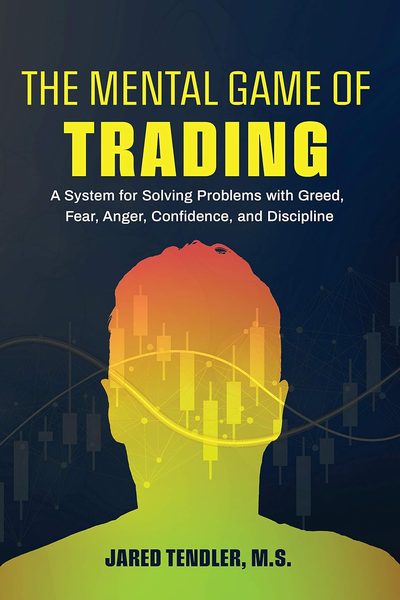
Almost every trading-psychology book tells you the same thing: control your emotions, be disciplined, stay calm. Jared Tendler’s The Mental Game of Trading does something far more useful. It treats greed, fear, anger, lack of confidence, and lack of discipline not as character flaws to suppress, but as signals pointing to a specific, fixable root cause, and it gives you a system to find and correct it.
Tendler is a performance coach who built his reputation in poker and golf before turning to trading. That cross-domain background matters, because his method is not trading folklore. It is a repeatable diagnostic process for emotional problems that works the same whether you are losing your composure at a poker table, on a fairway, or in front of a chart.
At a Glance
| Author | Jared Tendler |
| First Published | 2021 |
| Pages | ~270 |
| Genre | Trading psychology / performance |
| Difficulty | Intermediate — clear, but requires real self-work |
| Best For | Traders who keep repeating the same emotional mistakes despite knowing better |
| Skip If | You want a quick fix and will not do the journaling the method requires |
OVERALL RATING: 8.5 / 10
Who Should Read This Book
| Reader | Verdict | Why |
|---|---|---|
| New trader (0–1 year) | Read it early | Building the diagnostic habit now saves you years of repeating the same mistakes |
| Intermediate (1–3 years) | Essential | This is the stage where the same emotional leaks keep costing you. Tendler’s system is built for exactly this. |
| Advanced / professional | Read it | Even refined traders have a recurring tilt pattern. The method finds the one you have stopped noticing. |
| Prop-firm candidate | Read it | Challenges are failed on emotional execution, not analysis. This targets the exact leaks that blow accounts. |
| Trader without a method yet | Wait a little | This fixes execution, not edge. Build a method first, then use this to stop sabotaging it. |
| Anyone who has read Douglas | Perfect next step | Where Douglas explains the right mindset, Tendler gives you the process to actually reach it |
The Book in Context
Most of the trading-psychology canon, from Mark Douglas onward, is excellent at describing the destination: a calm, detached, process-focused state of mind. What that literature has historically lacked is a step-by-step map for getting there. Telling an emotional trader to “be disciplined” is like telling an anxious person to “just relax.” True, useless, and slightly insulting.
Tendler’s contribution is the map. He treats emotion as information. A spike of fear, a surge of greed, a flash of anger after a loss: each is a signal that something underneath, a flawed belief, a bias, an unrealistic expectation, needs correcting. Fix the cause and the emotional symptom fades on its own. That reframing is what makes this one of the most genuinely actionable psychology books in the field.
The Core Idea: Emotions Are Signals, Not Enemies
The book’s foundation is that you cannot win a war of willpower against your own emotions. Suppressing fear or forcing discipline works for a while and then collapses under pressure, usually at the worst possible moment. Instead, Tendler argues that each emotion is pointing at a specific underlying flaw, and the job is to follow the signal back to its source.
The process is methodical: record your emotional reactions in detail, look for the patterns, identify the recurring root cause behind them, and correct the flawed belief driving it. Done consistently, the emotion stops firing because the thing it was warning you about has been resolved. This is psychology as engineering, not affirmation.
“Your emotions are not the problem. They are the signal pointing to the problem.”
— The central reframe of The Mental Game of Trading
The Tools Worth the Price of the Book
| Tool | What It Does |
|---|---|
| Mapping your emotional patterns | A structured way to record triggers and reactions until the recurring pattern becomes obvious |
| Finding the root cause | Tracing a surface emotion back to the flawed belief or expectation actually driving it |
| The Inchworm concept | Improving both your worst days and your best days, so your whole range of performance moves up together |
| Real-time correction | Practical steps to interrupt a spiral in the moment, once you know what is really driving it |
Where the Book Falls Short
- It demands real work. The system only works if you do the journaling and pattern-mapping consistently. Readers who want a passive read will not get the benefit.
- It fixes execution, not edge. Tendler assumes you already have a method. If your real problem is the absence of a profitable approach, this book solves the wrong half of the equation.
- The framework can feel abstract at first. Until you apply it to your own reactions, the root-cause process can read as theory. It clicks in practice, not on the page.
- Some repetition. The emotion chapters follow a similar structure, which is helpful for reference but can feel repetitive read end to end.
How the Book Fits the Mind · Method · Money Framework
| Pillar | Contribution | What the Book Delivers |
|---|---|---|
| MIND | PRIMARY | A complete, actionable system for diagnosing and resolving the emotional problems that wreck execution |
| METHOD | INDIRECT | No setups, but it makes you capable of actually executing whatever method you trade |
| MONEY | SECONDARY | Resolving greed and fear directly protects your risk rules from being overridden in the moment |
This is a Mind-pillar book, but unusually it is the one that makes the other two pillars actually function. The best method and the strictest risk rules are worthless if emotion overrides them at the click of the mouse. Read it alongside the Mind · Method · Money framework as the tool that protects your discipline under fire.
Read This Instead Of / Read This After
| Relationship | Book | Why |
|---|---|---|
| Read after | Trading in the Zone by Mark Douglas | Douglas defines the destination; Tendler gives you the practical route to it |
| Read alongside | Best Loser Wins by Tom Hougaard | Hougaard supplies the raw mindset; Tendler supplies the system to build it methodically |
| Read instead of | Generic “control your emotions” advice | This is the rare book that tells you how, not just what |
Final Verdict: Should You Read This Book in 2026?
Yes, especially if you keep making the same emotional mistakes despite knowing better. The Mental Game of Trading is the most practical, system-driven book on trading psychology available, and it fills the exact gap the classics leave open: not what the right mindset is, but how to actually build it.
Treat it as a workbook, not a read-once paperback. Do the journaling, map your patterns, and follow the signals back to their cause. The traders who get the most from this book are the ones who put down the highlighter and pick up a trading journal.
CTE Rating Breakdown
8.5/10
The Most Actionable Psych Book
| Readability | 8 | |
| Actionability | 10 | |
| Timelessness | 8 | |
| Beginner-Friendly | 8 | |
| Modern Relevance | 10 |
Frequently Asked Questions
What is The Mental Game of Trading about?
It is a system for solving trading problems caused by greed, fear, anger, lack of confidence, and lack of discipline. Rather than suppressing emotions, it treats them as signals and teaches you to trace each one back to its root cause and correct it.
How is it different from other trading-psychology books?
Most books describe the ideal mindset. Tendler gives a concrete, repeatable process for reaching it: map your patterns, find the root cause, and resolve it. It is a method, not a motivational read.
Do I need a trading method before reading it?
Ideally yes. The book fixes execution, not edge. If you do not yet have a profitable approach, build one first, then use this to stop emotion from sabotaging it.
Is the author qualified to write on trading?
Jared Tendler is a performance coach who developed his method in poker and golf before applying it to trading. The system is domain-general, which is part of why it is so robust.
Will reading it actually change my trading?
Only if you do the work. The journaling and pattern-mapping are the active ingredient. Readers who apply the process consistently report real change; passive readers get little.
What is the single most important takeaway?
Discipline is not a trait you lack; it is the by-product of resolving the problems beneath your emotions. Fix the cause, and the symptom, and the indiscipline, fades.
About the Author
Jared Tendler
Jared Tendler is a mental game coach who first made his name working with elite poker players and golfers, then brought the same diagnostic method to trading. His earlier books, The Mental Game of Poker and its sequel, are considered standards in their field.
His distinctive contribution is treating performance psychology as a problem-solving discipline rather than a motivational one, an approach that travels cleanly from the felt to the fairway to the trading screen.
Continue Learning
- Trading Psychology: The Complete Guide
- Trading in the Zone Book Review (2026)
- Best Loser Wins Book Review (2026)
- The Three Pillars: Mind, Method, Money
- The Complete Trader’s Edge — The Book
 The Complete Trader's Edge
The full Mind · Method · Money framework. 70 chapters.
View on Amazon →
The Complete Trader's Edge
The full Mind · Method · Money framework. 70 chapters.
View on Amazon →
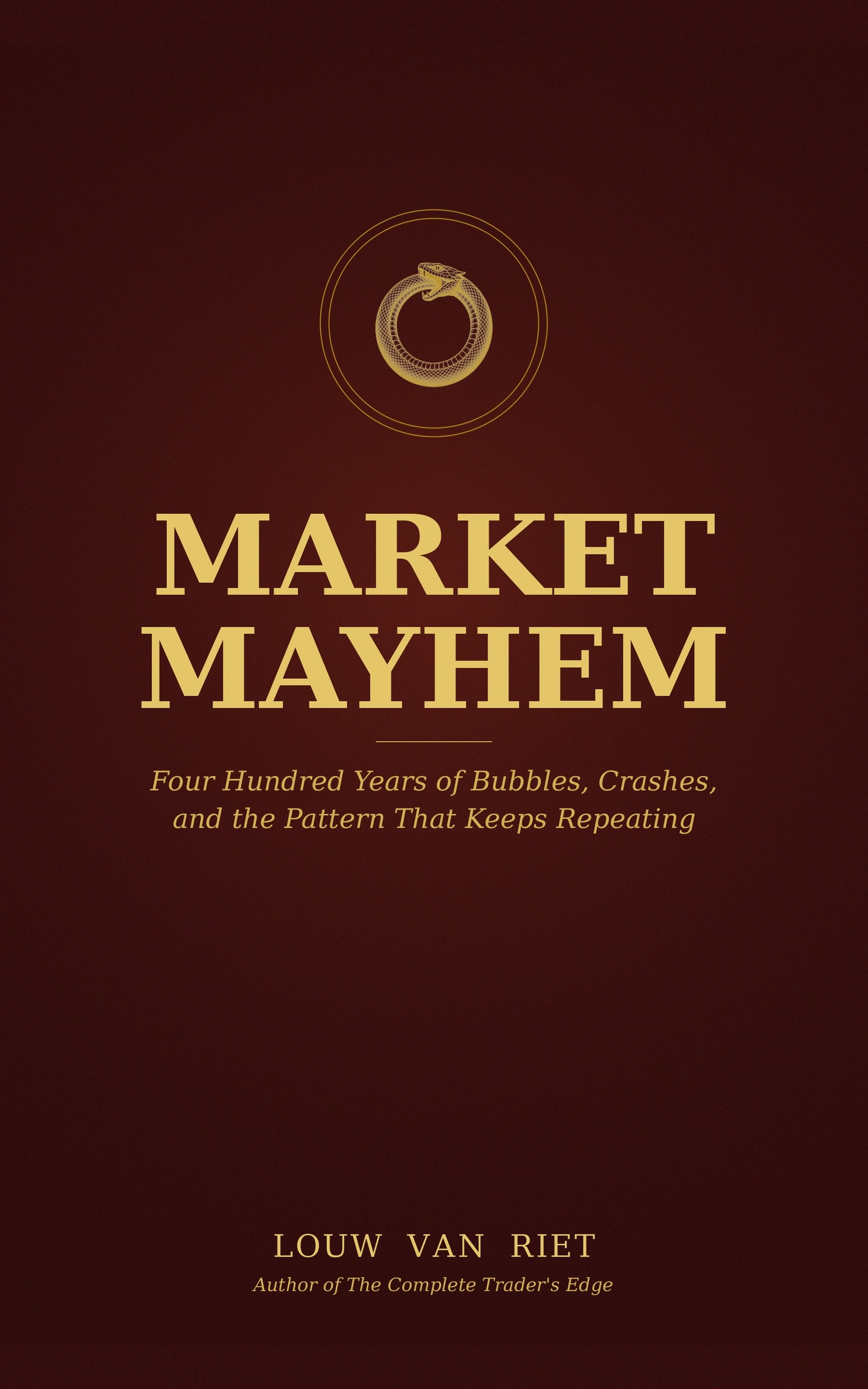 Market Mayhem
400 years of bubbles, crashes, and the pattern that keeps repeating.
Buy on Amazon →
Market Mayhem
400 years of bubbles, crashes, and the pattern that keeps repeating.
Buy on Amazon →
 Greatest Companies
How the world's greatest companies were built — and what traders learn from them.
View on Amazon →
Greatest Companies
How the world's greatest companies were built — and what traders learn from them.
View on Amazon →
 Greatest Traders
Eighty-six lives that explain the markets — Livermore to Madoff, told with the losses left in.
View on Amazon →
Greatest Traders
Eighty-six lives that explain the markets — Livermore to Madoff, told with the losses left in.
View on Amazon →