
The trader who blames the market for their losses will never improve. The trader who blames their broker, their indicators, their internet connection, the news, the manipulation, the algorithm, will spend their entire career looking outward for the source of a problem that lives inside them. Jordan Peterson would diagnose this immediately: it is a failure of responsibility. And until it is fixed, nothing else can be.
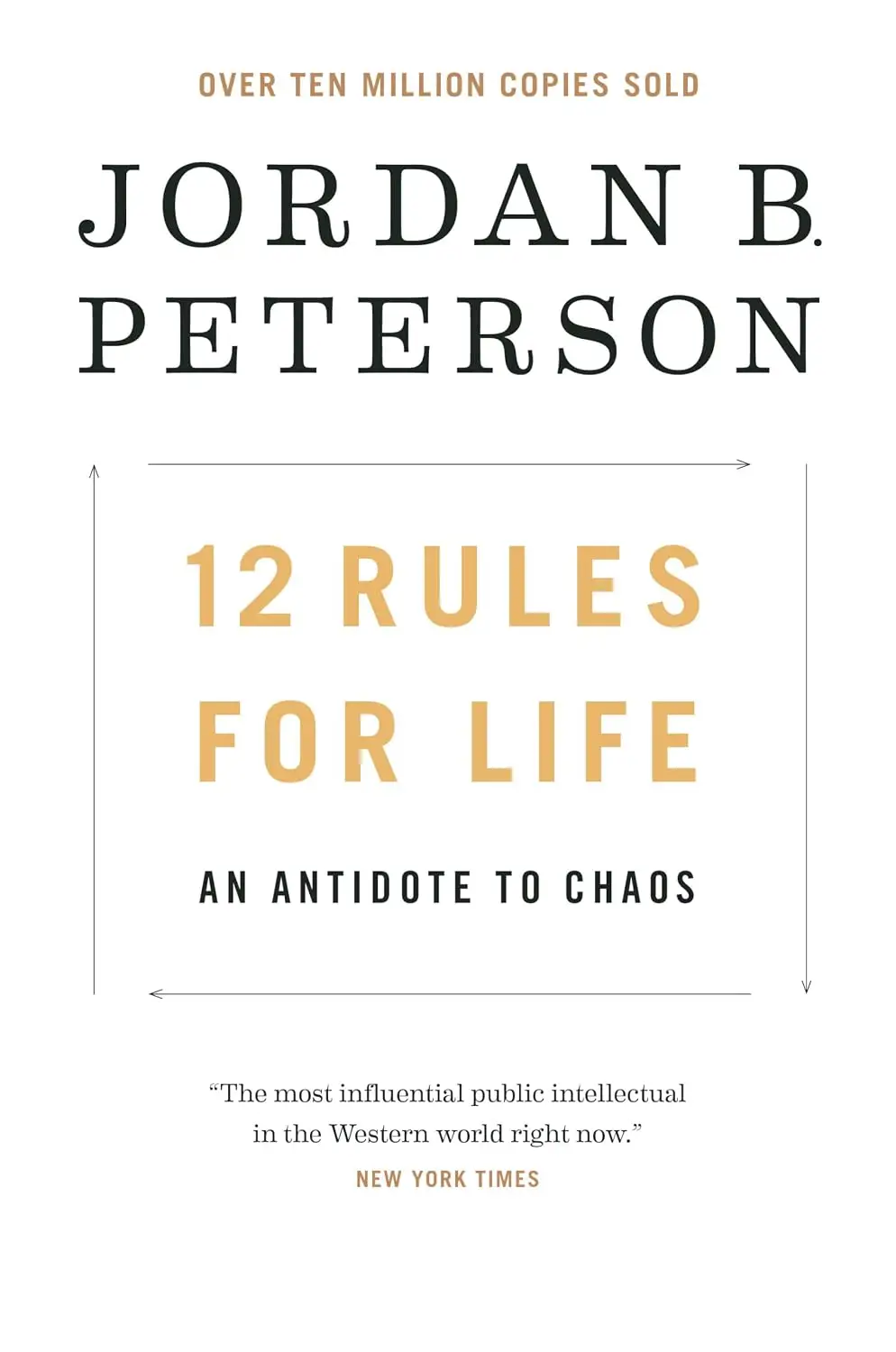
Peterson is a clinical psychologist, professor, and the author of 12 Rules for Life: An Antidote to Chaos, one of the bestselling non-fiction books of the last decade. His work on personal responsibility, truth-telling, meaning, and the relationship between order and chaos has resonated with millions of people, and it resonates with particular force for traders, because trading is the purest expression of the chaos-order dynamic that Peterson describes.
| Key Concept | Original Context | Trading Translation |
|---|---|---|
| Stand up straight | Confidence and competence reinforce each other | Approach the market from strength: tested strategy, written plan, defined risk. Posture follows preparation. |
| Compare yourself to who you were yesterday | Self-competition beats external comparison | Track your own process score improvement, not other traders P&L. Your journal is your only benchmark. |
| Set your house in order | Fix what you can control before blaming external factors | Fix your risk management, routine, and journalling before blaming the market for your losses. |
| Tell the truth (or at least do not lie) | Self-deception compounds into disaster | Be brutally honest in your journal. A losing trade you scored as process-compliant when it was not poisons your data. |
Markets are chaos. Your trading plan is order. The question every session answers is whether you have the psychological structure to impose your order on the chaos without breaking, bending, or abandoning it when the pressure mounts. Peterson’s work provides the framework for building that structure. This article maps his most powerful principles directly onto the daily reality of trading, not as motivation, but as a practical diagnostic and repair manual for the trader who knows what to do and cannot make themselves do it.
The twelve rules discussed in this article, in full. Peterson is a polarising figure; the rules on responsibility and comparison stand on their own regardless of what you make of him.
Rule 1: Stand Up Straight With Your Shoulders Back — Own Your P&L
Peterson’s first rule is about more than posture. It is about dominance hierarchies, competence, and the willingness to face the world as it is rather than retreating from it. He uses the example of lobsters: when a lobster wins a confrontation, its serotonin levels rise, it stands taller, it moves more confidently, and it becomes more likely to win the next confrontation. When it loses, it shrinks, avoids conflict, and becomes more likely to lose again.
The parallel to trading is direct. When a trader takes a loss and responds by shrinking, by reducing size below their plan, by skipping valid setups, by avoiding the market entirely, they are entering the losing lobster cycle. Each avoidance reinforces the belief that the market is dangerous and they are inadequate to face it. The losses compound not because the strategy failed but because the trader’s psychological posture collapsed.
“Standing up straight” in trading means owning your results completely. It means opening your P&L statement and looking at it without flinching. It means entering the next valid setup at full size even after a string of losses, because the system has positive expectancy and the individual outcome is irrelevant. It means carrying yourself as a professional who has prepared, who has a plan, and who executes that plan regardless of what happened yesterday.
This is not bravado. It is competence expressed through posture, both physical and psychological. The trader who sits upright, breathes deeply, and approaches the session with the quiet confidence of someone who has done the work is physiologically and psychologically better positioned to make good decisions. Research on embodied cognition confirms what Peterson describes: your physical posture literally changes your hormonal profile and cognitive performance. The pre-session routine should include a deliberate physical reset for exactly this reason.
Rule 2: Treat Yourself Like Someone You Are Responsible For Helping
Peterson observes that most people take better care of their pets than they take care of themselves. They will follow a veterinarian’s instructions for their dog with perfect compliance while ignoring their own doctor’s advice. The same pattern appears in trading: traders will give excellent advice to others (“follow your plan, take the stop, don’t revenge trade”) while consistently violating that same advice in their own trading.
The reason, Peterson argues, is that most people do not believe they deserve to be helped. At some level, they believe they deserve the suffering that comes from self-neglect. In trading, this manifests as the trader who knows their rules, teaches their rules to others, and then breaks their rules repeatedly in their own account. They are, unconsciously, acting out a narrative of self-punishment.
Peterson’s solution is to act as if you are someone you are responsible for helping. Imagine you are managing someone else’s account, someone who trusts you, whose financial future depends on your decisions. Would you move their stop loss because you “feel” like the trade will come back? Would you risk 5% of their capital on a revenge trade? Would you skip the trading journal entry because you are too frustrated to review the session?
Of course not. You would follow the plan. You would manage the risk. You would do the work. The gap between how you would manage someone else’s capital and how you manage your own is the measure of how little you are treating yourself as someone worth helping.
Rule 3: Make Friends With People Who Want the Best for You — Your Trading Circle Matters
Peterson warns against surrounding yourself with people who drag you down, not out of malice necessarily, but because their own dysfunction is contagious. In trading, this translates to the trading rooms, Discord servers, and social media feeds you spend your time in.
If your trading community celebrates reckless size, mocks stop losses, glorifies “diamond hands” holding through devastating drawdowns, or treats trading like a casino where luck is the primary variable, that community is making you worse. The social pressure to conform is one of the most powerful forces in human psychology. You will, over time, begin to adopt the behaviours of the group you spend the most time with.
Conversely, if your community values process, respects risk management, shares both wins and losses honestly, and treats trading as a professional skill to be developed through deliberate practice, that community will elevate your performance. The probability mindset is much easier to maintain when everyone around you is operating from the same framework.
Peterson’s advice is blunt: make friends with people who want the best for you, and be willing to walk away from those who do not. In trading terms, curate your information environment ruthlessly. Unfollow the accounts that make you feel inadequate or impulsive. Seek out the traders and educators who emphasise process, honesty, and long-term development. Your trading circle is not neutral. It is either helping you or harming you.
Rule 4: Compare Yourself to Who You Were Yesterday — The Equity Curve of Personal Growth
This rule is perhaps the most directly applicable to trading. Peterson argues that comparing yourself to other people is a recipe for misery because you are comparing your behind-the-scenes to their highlight reel. The only meaningful comparison is between who you are today and who you were yesterday.
For traders, this means the comparison that matters is not your P&L versus someone else’s screenshots on social media. It is your execution quality this month versus last month. Your rule adherence this week versus last week. Your journal completeness today versus yesterday.
This is where the trading journal becomes the most powerful tool in your entire setup. Not as a record of profits and losses, but as a record of your own growth. Can you see the improvement? Are you holding to your stops more consistently than you were three months ago? Are you entering at your levels rather than chasing? Are you taking full size on your A+ setups rather than trading scared?
If the answer is yes, you are winning, regardless of what your P&L says this particular month. Process improvement is a leading indicator. P&L is a lagging indicator. Peterson’s rule redirects your attention from the lagging measure (which you cannot control) to the leading measure (which you can). This is identical to the consistency framework taught throughout the Mind pillar of The Complete Trader’s Edge.
Rule 5: Do Not Let Your Children Do Anything That Makes You Dislike Them — Set Boundaries With Yourself
Peterson’s parenting rule is really about the necessity of boundaries and discipline, applied with love rather than cruelty. The parent who lets their child do whatever they want is not being kind. They are being negligent, because the world will not be so accommodating, and the child will be unprepared for its demands.
Applied to trading, you are both the parent and the child. The “child” is the part of you that wants to break the rules: take the impulsive trade, skip the journal, move the stop, increase size after a win. The “parent” is the part of you that knows better and must enforce the rules, not with anger or self-punishment, but with firm, consistent boundaries.
This means consequences for rule violations. Not emotional consequences (guilt, shame, self-criticism) but structural ones. If you break your stop loss rule, you stop trading for the day. Not as punishment, but as a boundary. If you take a trade outside your plan, you journal it immediately, identify the trigger, and design a specific prevention protocol. If you skip your pre-session routine, you do not trade until you have completed it.
These boundaries are acts of self-respect, not self-punishment. Peterson’s point is that discipline and love are not opposites. The trader who enforces their own rules is treating themselves as someone worth protecting, someone whose future performance matters enough to sacrifice the short-term impulse for the long-term development.
Rule 6: Set Your House in Perfect Order Before You Criticise the World
Before you complain about market manipulation, about your broker’s spread, about the news that “ruined” your trade, about the algorithm that “hunted” your stop, Peterson would say: have you set your own house in order first?
Is your trading plan written and specific? Is your risk management defined to the decimal? Is your journal up to date? Have you reviewed your last 50 trades for patterns? Is your pre-session routine consistent? Are you well-rested, properly fed, and physically prepared to make high-quality decisions?
If the answer to any of these is no, then you have no business criticising external forces for your results. The vast majority of trading losses come from internal failures: poor execution, emotional decision-making, inadequate preparation, inconsistent process. These are all within your control. Until you have maximised everything within your control, blaming anything outside your control is a waste of energy and an abdication of responsibility.
This connects directly to the Mind, Method, Money framework. Have you genuinely addressed all three pillars? Is your psychology managed? Is your method tested and documented? Is your money management precise and non-negotiable? If not, the “market” is not your problem. You are your problem. And unlike the market, you can be fixed.
Rule 8: Tell the Truth — Or, At Least, Don’t Lie (Especially in Your Journal)
Peterson considers truth-telling the foundational ethical act. He argues that lies, even small ones, corrupt everything they touch. They distort your perception of reality, undermine your relationships, and prevent you from learning from your mistakes. You cannot navigate the world effectively if you are lying to yourself about where you are.
In trading, the most common lies are the ones traders tell themselves in their journals, or more precisely, the lies they tell by omitting the truth:
“The market moved against me” (I ignored my stop and held too long).
“It was a valid setup” (I entered because I was bored, not because the setup met my criteria).
“Bad luck” (I sized too large and got punished for it).
“I’ll get it back tomorrow” (I am emotionally compromised and should not be trading).
A trading journal that contains these lies is worse than no journal at all, because it creates a false record that prevents you from seeing your own patterns. Peterson would say: the truth may be painful, but the lie is catastrophic. Write what actually happened. Write the emotional state you were in. Write the rule you broke and why you broke it. Write the truth about the trade, even when the truth makes you uncomfortable.
This is where real growth happens. Not in the winning trades, but in the honest examination of the losing ones. The psychology of losing only improves when you stop lying about why you lost.
Rule 11: Do Not Bother Children When They Are Skateboarding — Let the Market Teach You
This rule is about allowing exposure to risk as a necessary component of development. Peterson argues that overprotection produces fragility. Children need to fall off skateboards, scrape their knees, and learn through direct experience that the world is challenging but navigable. The alternative, wrapping them in protective layers, produces adults who cannot handle adversity.
In trading, the equivalent of overprotection is paper trading indefinitely, never going live because “I’m not ready yet.” Or trading with such tiny size that the outcomes carry no emotional weight, which means no psychological development occurs. Or avoiding volatile instruments because they “move too fast.”
The uncomfortable truth is that trading skill develops through exposure to real risk. You learn to manage fear by experiencing fear with real money on the line. You learn to hold winners by feeling the genuine pull to take profits early and overriding it. You learn to take stops by experiencing the real pain of a loss and proving to yourself that you can absorb it and continue.
This does not mean reckless risk-taking. Peterson’s skateboarding children are wearing helmets. The trading equivalent is proper position sizing: small enough to survive the learning process, large enough to produce genuine emotional engagement. The 1% risk rule is not just risk management. It is the optimal balance between protection and exposure that allows psychological development to occur.
Rule 12: Pet a Cat When You Encounter One — Find Moments of Grace in the Chaos
Peterson’s final rule is about finding moments of beauty and meaning even in suffering. He wrote this chapter while his daughter was critically ill, and it reflects his belief that the pursuit of meaning, not happiness, is what makes life bearable during its worst periods.
Trading will contain suffering. Drawdowns. Blown accounts. Months where everything you do seems wrong. Periods where the market is untradeable for your strategy and you sit on the sidelines watching others profit. These periods are not optional. They are built into the structure of the activity.
Peterson would say: do not run from them. Find the meaning in them. The drawdown that teaches you to survive is more valuable than the winning streak that teaches you nothing. The blown account that forces you to rebuild your approach from first principles is the education that produces genuine competence. The period of enforced patience is when you develop the discipline that will carry you for decades.
“Pet the cat” in trading means noticing the moments of genuine progress amidst the difficulty. The trade you held to target when every instinct screamed to exit early. The journal entry where you identified a pattern you had never seen before. The session where you sat on your hands and took no trades because none met your criteria, and felt good about it. These are the moments that matter, and they deserve to be acknowledged.
Peterson’s Concept of Order and Chaos Applied to Markets
The overarching theme of Peterson’s work is the tension between order and chaos and the necessity of navigating between them. Too much order produces rigidity and stagnation. Too much chaos produces anxiety and destruction. The optimal position is at the boundary between the two, what Peterson calls “the edge,” where enough structure exists to provide stability but enough uncertainty exists to produce growth.
This maps perfectly to trading. A trader with too much order, too many rules, too many confirmations required, too rigid an approach, never takes trades. They are paralysed by their own system. A trader with too much chaos, no plan, no rules, pure discretion, takes every trade and loses to randomness. The professional operates at the boundary: a clear structure (market structure, defined setups, risk rules) that provides order, combined with the acceptance that every trade contains irreducible uncertainty that no amount of analysis can eliminate.
Peterson calls this the place of meaning. The trader who has found this balance, who has enough structure to be disciplined but enough flexibility to adapt, who accepts uncertainty without being paralysed by it, is operating in the zone that produces both performance and growth. This is what the multi-timeframe approach provides: higher-timeframe structure (order) with lower-timeframe execution (navigating chaos within a framework).
The Responsibility Shift: From Victim to Operator
If there is one concept that unifies all of Peterson’s work and makes it uniquely powerful for traders, it is this: radical responsibility. You are responsible for your results. Not the market. Not the news. Not the algorithm. Not luck. You.
This is not a comfortable message, and Peterson does not intend it to be. It is comfortable to blame external forces for your losses. It protects the ego. It preserves the fantasy that you are a good trader who keeps getting unlucky. But it also guarantees that nothing changes, because if the problem is external, there is nothing you can do about it.
The moment you accept full responsibility for every trade, every loss, every deviation from your plan, everything changes. Because now you have agency. Now you can examine your decisions and improve them. Now your journal becomes a tool for growth rather than a record of grievances. Now every loss contains a lesson instead of an excuse.
This shift, from victim to operator, from blamer to owner, is the single most important psychological transformation a trader can make. Peterson’s entire body of work is built on this principle, and it is the foundation on which everything in trading psychology rests.
Peterson and the Mind · Method · Money Framework
Mind: Peterson’s emphasis on radical responsibility, truth-telling, and the comparison of yourself to who you were yesterday provides the psychological infrastructure for sustainable trading development. His work explains why traders self-sabotage (they are avoiding the responsibility of honest self-examination) and provides the antidote (tell the truth, set your house in order, stand up and face the market as it is).
Method: Peterson’s order-chaos framework maps directly onto the trader’s challenge: building enough structure to be disciplined while maintaining enough flexibility to operate in an uncertain environment. The trading plan is the order. The market is the chaos. Your job is to navigate between them with competence and courage.
Money: Peterson’s insistence on boundaries and consequences connects to risk management as a non-negotiable structure. Position sizing rules are boundaries. Stop losses are boundaries. Maximum daily loss limits are boundaries. These are not restrictions on your freedom. They are the structures that make sustainable trading possible, just as Peterson’s rules are not restrictions on life but the framework that makes a meaningful life possible.
Continue Reading: The Inner Edge
▶ Tony Robbins: Peak Performance Principles for Traders
▶ James Clear: How Atomic Habits Builds Trading Discipline
▶ Ryan Holiday: Stoicism for Unshakeable Trading Discipline
The Complete Trader’s Edge
This article is part of The Inner Edge series. The psychology principles explored here are covered in depth across the 22 chapters of the Mind pillar in The Complete Trader’s Edge.
Frequently Asked Questions
How does Jordan Peterson’s philosophy apply to trading?
Peterson’s core principles of radical responsibility, truth-telling, and navigating the boundary between order and chaos map directly onto trading psychology. His emphasis on owning your results rather than blaming external forces, maintaining honest self-assessment through journaling, and building disciplined structure to navigate uncertainty addresses the exact psychological challenges that cause most traders to fail despite having viable strategies.
What does “clean your room” mean for traders?
Peterson’s “set your house in perfect order” principle means ensuring every aspect of your trading within your control is optimised before blaming external factors. This includes having a written trading plan, consistent pre-session routine, up-to-date journal, defined risk management rules, proper physical preparation, and honest self-assessment. Until these internal elements are addressed, complaining about market conditions or broker execution is an avoidance of responsibility.
How can Peterson’s 12 Rules improve trading discipline?
Peterson’s rules provide a framework for building psychological structure: take responsibility for your results, tell the truth in your journal, compare yourself only to your past performance, set firm boundaries with consequences for rule violations, and find meaning in the difficult periods. These principles create the psychological resilience and self-honesty that consistent trading demands, addressing the root causes of undisciplined behaviour rather than just the symptoms.
What is the connection between radical responsibility and trading success?
Radical responsibility means accepting that you, not the market, are the primary cause of your trading results. This shift transforms your relationship with losses from blame to learning, turns your journal from a record of excuses to a tool for improvement, and creates the agency needed to systematically eliminate the behaviours that produce poor outcomes. Traders who take full ownership of their results improve faster than those who externalise blame.
How does Peterson’s order-chaos framework relate to trading?
Markets represent chaos: unpredictable, complex, and inherently uncertain. Your trading plan represents order: structured rules, defined setups, and systematic risk management. Peterson argues that the optimal place to operate is at the boundary between order and chaos, where your structure provides stability while you accept and navigate the irreducible uncertainty of each trade. This describes the professional trader’s mindset exactly.
 The Complete Trader's Edge
The full Mind · Method · Money framework. 70 chapters.
View on Amazon →
The Complete Trader's Edge
The full Mind · Method · Money framework. 70 chapters.
View on Amazon →
 Market Mayhem
400 years of bubbles, crashes, and the pattern that keeps repeating.
Buy on Amazon →
Market Mayhem
400 years of bubbles, crashes, and the pattern that keeps repeating.
Buy on Amazon →
 Greatest Companies
How the world's greatest companies were built — and what traders learn from them.
View on Amazon →
Greatest Companies
How the world's greatest companies were built — and what traders learn from them.
View on Amazon →
 Greatest Traders
Eighty-six lives that explain the markets — Livermore to Madoff, told with the losses left in.
View on Amazon →
Greatest Traders
Eighty-six lives that explain the markets — Livermore to Madoff, told with the losses left in.
View on Amazon →