
Your alarm goes off at 4:30 AM. It is dark. It is cold. Every fibre of your body wants to stay in bed. Jocko Willink would say one word: good.
Good. You had a losing day. Good. Now you know what to fix. Good. Your stop got hit. Good. Your risk management worked. Good. The market moved without you. Good. Now you know you can be patient. Good. You blew your account. Good. Now you have the motivation to never let it happen again.
Jocko Willink is a retired US Navy SEAL commander, author of Extreme Ownership and Discipline Equals Freedom, and one of the most uncompromising voices on leadership, discipline, and personal accountability in the world. He led SEAL Team Three’s Task Unit Bruiser in the Battle of Ramadi, one of the most violent urban combat operations of the Iraq War. His lessons from combat have been translated into frameworks for business, leadership, and performance that are used by CEOs, athletes, and special operations forces worldwide.
| Key Concept | Original Context | Trading Translation |
|---|---|---|
| Extreme ownership | Take full responsibility for everything in your world | Every loss is your responsibility. The market did not trick you. Your analysis, entry, or sizing was wrong. Own it. |
| Discipline equals freedom | Strict routines create the freedom to perform at your best | A rigid pre-session routine, hard stop rules, and daily trade limits create the freedom to trade without anxiety. |
| Prioritise and execute | When overwhelmed, identify the single most important task and do it | During a drawdown: stop trading, review journal, identify the one pattern causing losses, fix that one thing. |
| Decentralised command | Empower teams with clear guidelines and let them execute | Empower your future self: write rules so clear that you can execute mechanically even when emotional. |
| Default aggressive | When in doubt, take action. Inaction is rarely the right choice. | When your checklist says enter and you hesitate: the default is to execute. Hesitation is not analysis. |
For traders, Jocko’s frameworks are not metaphors. Trading is a discipline where the consequences of poor decisions are measured in real money, where emotional reactions under pressure determine outcomes, and where the ability to own your mistakes without ego is the difference between survival and destruction. If any field outside of combat benefits from military-grade discipline, it is trading.
The leadership book first, then the field manual. Discipline Equals Freedom is short, blunt and closer to a training log than a book.
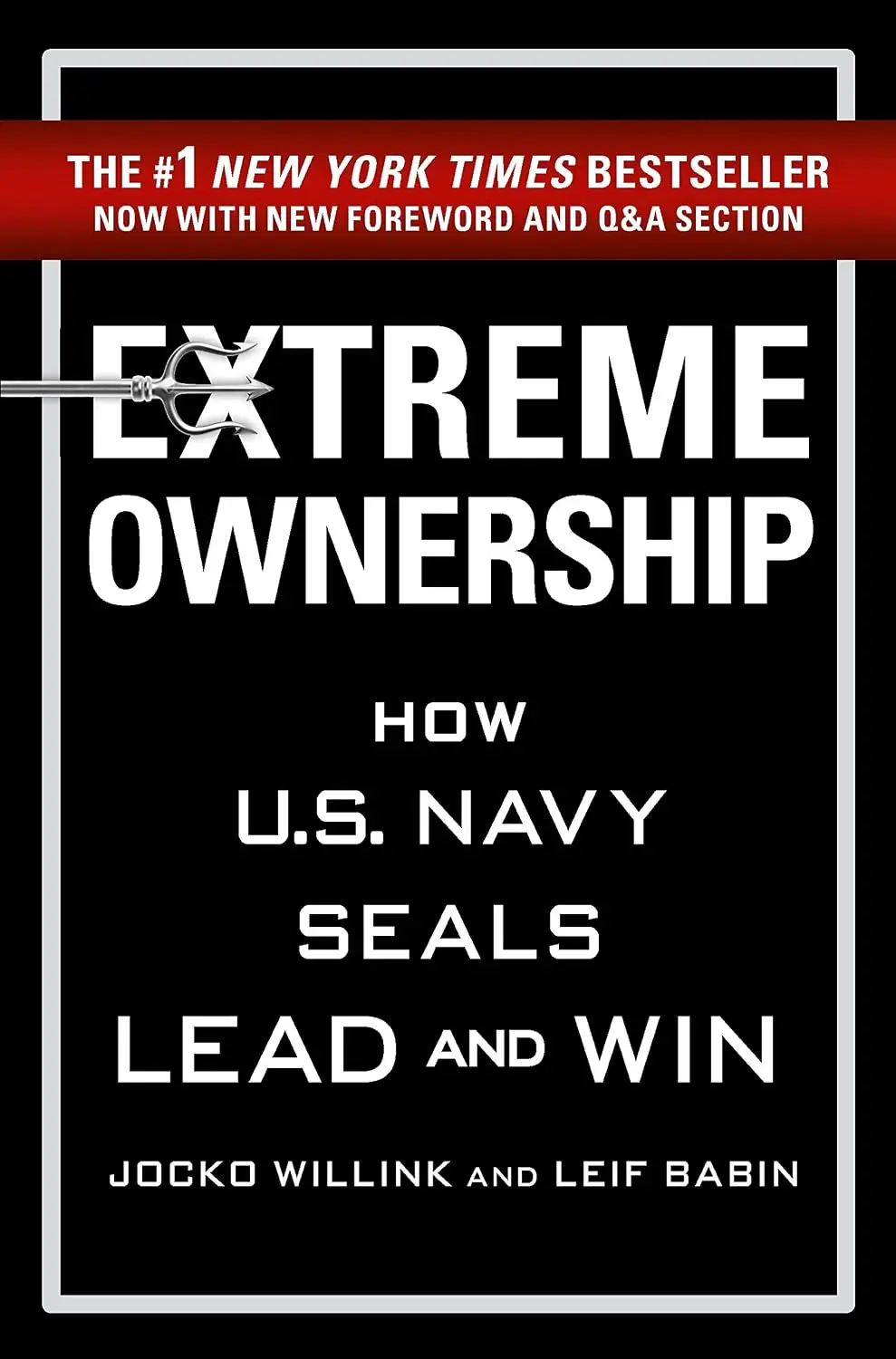
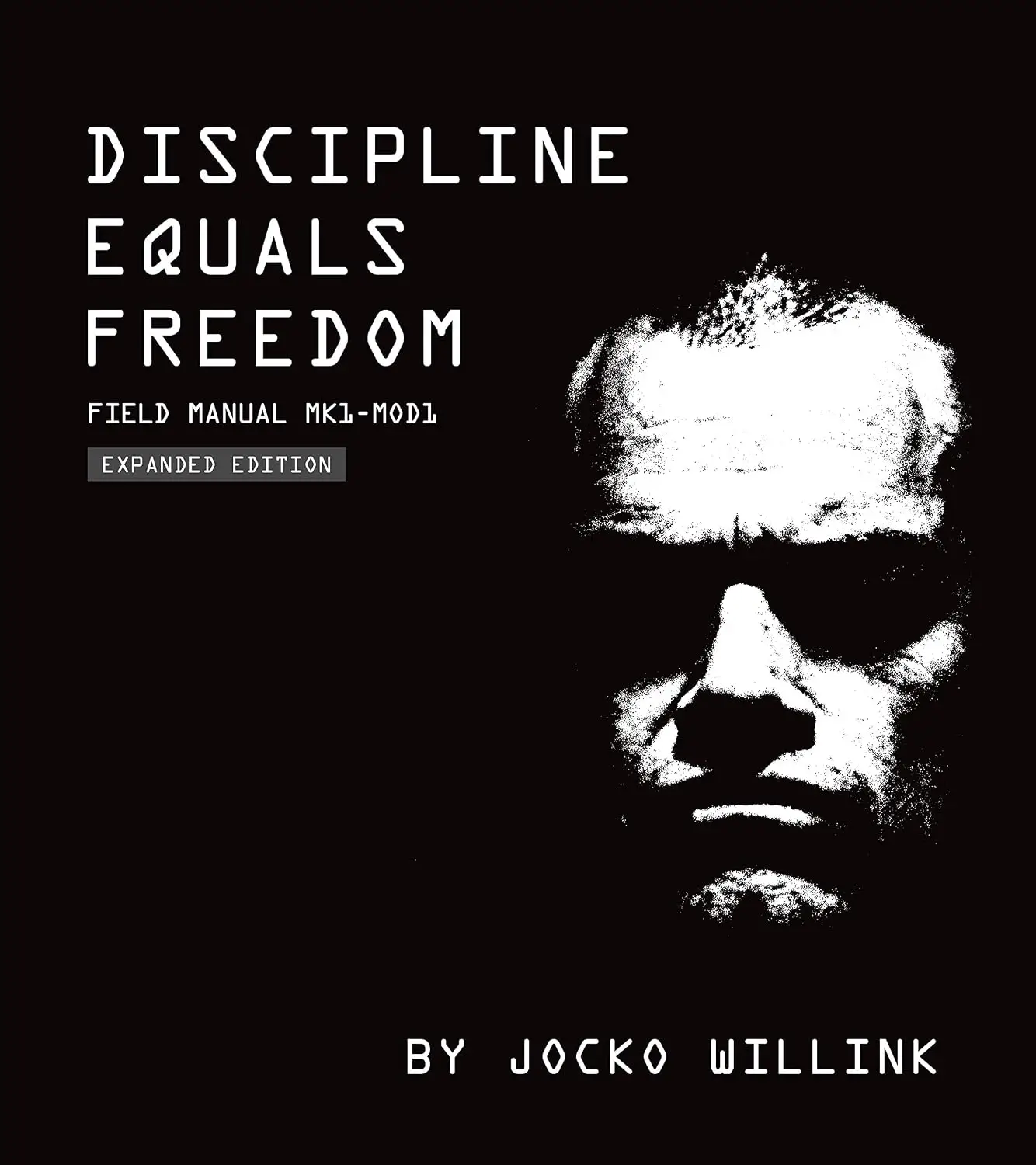
Extreme Ownership: Every Loss Is Your Fault
The central thesis of Extreme Ownership is that leaders must take complete ownership of everything in their world. There are no bad teams, only bad leaders. There are no excuses, only failures to prepare, adapt, or execute.
Applied to trading, Extreme Ownership eliminates every external blame narrative in one stroke. The market did not “take your money.” You risked money on a trade and the trade lost. Your broker did not “hunt your stop.” You placed a stop at a level that was within the range of normal price action. The news did not “ruin your trade.” You were in a position during a high-risk event without a plan for that scenario.
This is Jordan Peterson’s radical responsibility with military intensity. Jocko does not soften the message. If you lost money, it is your fault. If you broke your rules, it is your fault. If you were not prepared for a scenario that occurred, it is your fault. The moment you accept this completely, without reservation, you gain something that blame can never provide: the power to change.
Because if the loss is the market’s fault, there is nothing you can do. The market will not change for you. But if the loss is your fault, you can analyse the decision, identify the error, adjust the process, and prevent it from recurring. Extreme Ownership converts every loss from a grievance into a lesson. That conversion is the mechanism of improvement.
Discipline Equals Freedom
Jocko’s most famous concept is the paradox that discipline equals freedom. The person who disciplines themselves to wake early, exercise, eat well, follow a routine, and maintain standards does not experience these as restrictions. They experience them as the foundation of a life with more options, more energy, more capability, and more freedom than the undisciplined life could ever provide.
In trading, this paradox is literal. The trader who disciplines themselves to follow a trading plan, honour stop losses, risk exactly 1% per trade, journal every session, and stop trading when the plan is complete does not experience these as limitations. They experience them as the structure that produces consistent profitability. The “freedom” in trading is financial freedom, lifestyle freedom, freedom from a job you hate. And that freedom is only available through the discipline that most traders resist.
The undisciplined trader has “freedom” in the short term: freedom to take any trade, freedom to ignore the stop, freedom to risk as much as they want. But this short-term freedom produces long-term imprisonment: imprisonment in a cycle of losses, blowups, and the inability to build the consistency required for genuine financial independence.
Jocko would say: choose your discipline. Either you discipline yourself, or the market disciplines you. The first is controlled, measured, and builds toward the life you want. The second is violent, random, and destroys the capital you need to get there.
The “Good” Reframe
Jocko’s “Good” philosophy is one of the most powerful reframing tools available to traders. The concept: when something bad happens, the immediate response is “good.” Not because the bad thing is good. Because it creates an opportunity to improve, adapt, or demonstrate resilience.
Lost a trade? Good. The stop loss worked. You lived to trade tomorrow. Missed an entry? Good. You now know you need to refine your execution protocol. Had a flat month? Good. You did not lose money, and your patience is building. Hit your daily loss limit? Good. Your rules protected you from a worse outcome. Strategy is not working in this market? Good. Now you learn to identify when to sit out.
This is not toxic positivity. It is operational reframing. Jocko is not saying losses are fun. He is saying that the response to adversity determines whether the adversity becomes a setback or a catalyst. The trader who responds to a drawdown with “good, what can I learn?” will outperform the trader who responds with “this market is rigged” every single time, because the first response leads to improvement and the second leads to stagnation.
Decentralised Command: Trust Your Trading Plan
In SEAL operations, Jocko implemented decentralised command: the leader sets the mission objectives and parameters, then trusts the operators on the ground to make real-time decisions within those parameters. The leader does not micromanage every movement. They set the framework and trust the execution.
In trading, you are both the commander and the operator. The “commander” writes the trading plan during preparation: the levels, the setups, the risk parameters, the session limits. The “operator” executes the plan during the live session. Decentralised command means trusting the plan during execution and not second-guessing it in real time.
The problem most traders have is that their “commander” writes a good plan and their “operator” overrides it the moment emotions flare. The commander said 1% risk. The operator sizes at 3% because “this one looks really good.” The commander said take profit at target. The operator holds because “it could go further.” This is a command failure, and Jocko would address it by strengthening the plan’s clarity so that the operator has less room to improvise destructively.
The clearer and more specific the plan, the less room for emotional override. “Buy if price enters the FVG between 2,340 and 2,335 with a 15-minute rejection candle” leaves little room for interpretation. “Look for a buy somewhere around support” leaves enough room for the operator to do anything, which means they will do whatever their emotions dictate.
Detach and Assess
Jocko teaches a combat skill called detach: when the situation becomes chaotic, the leader must mentally step back, rise above the immediate chaos, and see the bigger picture before making a decision. In the fog of battle, the worst decisions come from leaders who are too close to the action, too emotionally involved, too reactive.
In trading, the ability to detach is the difference between a professional and an amateur. When price spikes against your position, when a news event hits, when you are in the middle of a losing streak and the next setup appears, the professional detaches: “What does my plan say? What is the bigger picture? Is this setup valid, or am I reacting to the noise?”
The amateur is in the chaos. They are fused with the price action, feeling every tick, reacting to every candle. They cannot see the higher timeframe structure because they are lost in the lower timeframe noise. Jocko’s “detach” command is the psychological discipline of zooming out, both on the chart and in your mind, before making any decision.
Practical application: after any trade that triggers an emotional response, before taking any further action, close the lower timeframe chart. Open the daily. Look at the bigger picture. Take three breaths. Then ask: “What would I advise another trader to do right now?” The act of advising someone else forces detachment. Your advice to others is almost always better than your real-time decisions for yourself, because advice is given from a detached perspective.
The Default Aggressive Mindset
Jocko teaches that the default setting should be aggressive: when in doubt, act. Do not wait for perfect information. Do not wait for certainty. Take the best available action and adjust as new information arrives.
For traders, default aggressive does not mean trading recklessly. It means: when your setup is confirmed and your plan says enter, enter without hesitation. When your stop is hit, close without debate. When your daily loss limit is reached, stop without negotiation. Aggression in Jocko’s framework is not reckless action. It is decisive action. It is the opposite of the hesitation, procrastination, and paralysis that destroy most trading accounts.
The hesitant trader watches setups form, analyses them to death, waits for one more confirmation, and enters too late or not at all. The default-aggressive trader has done the analysis in preparation, and when the moment arrives, they act. The quality of the decision was determined by the preparation. The speed of the execution is determined by the mindset. Jocko’s framework ensures both are sharp.
Jocko and the Mind · Method · Money Framework
Mind: Extreme Ownership eliminates the victim mentality that prevents most traders from improving. The “Good” reframe converts adversity into fuel. The discipline-equals-freedom paradox reframes rules not as restrictions but as the foundation of the freedom traders seek. This is the hardest, most demanding version of trading psychology in the Inner Edge series, and it is exactly what struggling traders need to hear.
Method: Decentralised command provides the framework for creating trading plans specific enough to execute without emotional interference. The detach skill addresses the real-time challenge of maintaining perspective when the market is moving against you. Default aggressive ensures that valid setups are executed rather than analysed into paralysis.
Money: Discipline equals freedom is a risk management principle. The discipline of consistent position sizing, honoured stop losses, and defined daily limits is the structure that produces the freedom of a growing account. Without the discipline, the “freedom” to take any risk produces the imprisonment of repeated blowups. Jocko’s framework makes the choice explicit.
Continue Reading: The Inner Edge
▶ Jordan Peterson: 12 Rules for Trading Discipline
▶ David Goggins: The 40% Rule for Mental Toughness
▶ Mel Robbins: The 5 Second Rule for Traders
The Complete Trader’s Edge
This article is part of The Inner Edge series. The psychology principles explored here are covered in depth across the 22 chapters of the Mind pillar in The Complete Trader’s Edge.
Frequently Asked Questions
How does Extreme Ownership apply to trading?
Extreme Ownership means taking complete responsibility for every trading result. The market did not take your money; you risked it. Your broker did not hunt your stop; you placed it at a vulnerable level. This total ownership eliminates blame and creates the agency needed to analyse decisions, identify errors, and systematically improve. Only the trader who owns every outcome can change future outcomes.
What does “discipline equals freedom” mean for traders?
The paradox is that the discipline of following a trading plan, honouring stops, maintaining consistent position sizing, and journaling every session produces the financial freedom that traders seek. Short-term “freedom” to break rules produces long-term imprisonment in a cycle of losses. The disciplined trader builds an account that eventually provides the lifestyle freedom that the undisciplined trader never achieves.
How does the “Good” reframe help after losing trades?
The “Good” response converts adversity into opportunity. Lost a trade? Good, the stop worked. Missed an entry? Good, refine the execution protocol. Hit the daily loss limit? Good, the rules protected you. This is not toxic positivity; it is operational reframing that channels the energy of setbacks into improvement rather than frustration.
What is the “detach” skill and how do traders use it?
Detaching means mentally stepping back from the immediate chaos to see the bigger picture before making decisions. In trading, this means closing the lower timeframe chart when emotions spike, opening the daily to see the broader structure, taking three breaths, and asking what you would advise another trader to do. This forced perspective shift produces better decisions than reactive responses to individual candles.
How does military leadership translate to trading discipline?
Military leadership frameworks like decentralised command (trust the plan during execution), default aggressive (act decisively when the setup is confirmed), and detach (maintain perspective under pressure) directly address the execution challenges traders face. The trading plan is the mission brief. The live session is the operation. The after-action review is the journal. The same principles that keep operators alive in combat keep traders profitable in markets.
 The Complete Trader's Edge
The full Mind · Method · Money framework. 70 chapters.
View on Amazon →
The Complete Trader's Edge
The full Mind · Method · Money framework. 70 chapters.
View on Amazon →
 Market Mayhem
400 years of bubbles, crashes, and the pattern that keeps repeating.
Buy on Amazon →
Market Mayhem
400 years of bubbles, crashes, and the pattern that keeps repeating.
Buy on Amazon →
 Greatest Companies
How the world's greatest companies were built — and what traders learn from them.
View on Amazon →
Greatest Companies
How the world's greatest companies were built — and what traders learn from them.
View on Amazon →
 Greatest Traders
Eighty-six lives that explain the markets — Livermore to Madoff, told with the losses left in.
View on Amazon →
Greatest Traders
Eighty-six lives that explain the markets — Livermore to Madoff, told with the losses left in.
View on Amazon →